The role of the CEO has changed. Ten years ago, the focus was on operational efficiency and driving profit through performance. While those are still important, they’re no longer enough. What sets leaders apart now is their ability to lead with vision, empathy, and adaptability in a world defined by constant change.
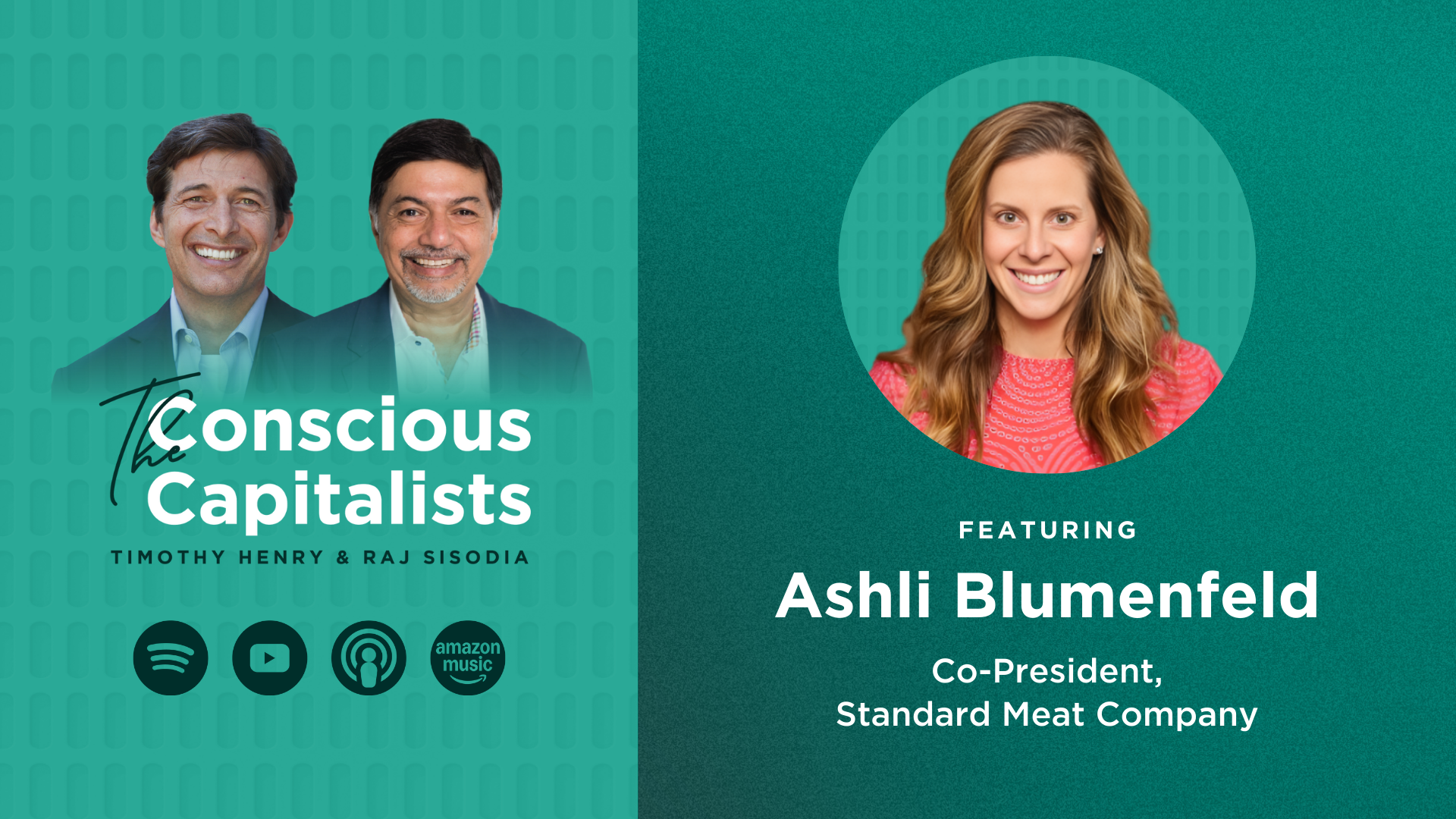
For Ashli Blumenfeld, Co-President of Standard Meat Company, this meant stepping into leadership not through hierarchy or tradition, but through deep personal reflection and culture-first decision-making.
In her recent conversation with Timothy Henry and Raj Sisodia on The Conscious Capitalists podcast, Ashli offered insights that speak directly to what’s keeping many CEOs up at night: How do you lead a company where people want to stay, grow, and give their best?
Here are three powerful takeaways from the session:
1. Culture is an infrastructure.
Standard Meat is a fourth-generation meat processing and innovation company navigating both tradition and transformation. Ashli emphasizes that culture isn’t the “soft stuff”, it’s what holds everything else together.
If your culture still lives in your HR department instead of in your operational strategy, you’re leaving value on the table. Culture determines whether teams feel safe enough to innovate, give feedback, or speak up when something’s off, all of which directly impact performance and retention.
2. Vulnerability scales faster than performance metrics
Ashli came into the family business from the outside, literally. With a background in fashion PR, she didn’t immediately see herself as a “business leader.” But instead of faking confidence, she embraced radical self-awareness.
Your own relationship with uncertainty sets the tone for your executive team. In a world full of volatility, your willingness to model transparency and growth can become your company’s emotional center of gravity.
3. Stakeholder loyalty is built in the tough seasons
One of the most compelling moments in the episode comes when Ashli describes how Standard Meat handled downturns. Rather than protect their margins at the expense of their customers, they chose to absorb some of the risk.
Stakeholder capitalism is a long game. The decisions you make during low-margin quarters define the partnerships that carry you into the next cycle.
Bottom line:
If you’re only measuring what can be quantified, you’re missing the core drivers of long-term value.
Ashli Blumenfeld’s story is a reminder that conscious leadership is about decisions that create stability in uncertainty, strength in culture, and loyalty across your ecosystem.
Listen to the full episode for a grounded, candid look at what it really takes to lead a company with heart and rigor.