Most companies still approach Gen Z with a familiar assumption: if the campaign is strong enough, the customer will follow.
That assumption is weakening quickly.
Younger consumers are not simply deciding what to buy. They are deciding:
- what communities they want to belong to
- which brands reflect their identity
- which companies feel culturally aware
- and increasingly, which organizations they trust enough to participate in
That changes the role of leadership.
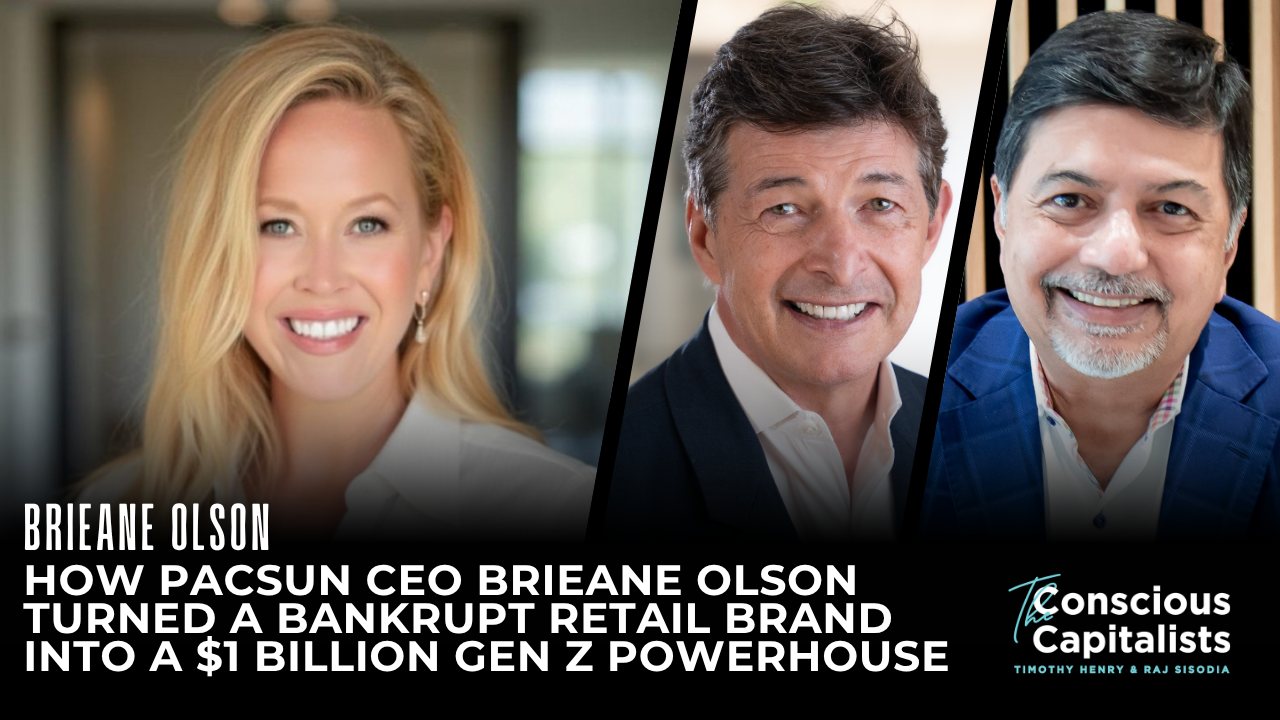
In a recent conversation on The Conscious Capitalists podcast, Brieane Olson described how Pacsun evolved from a traditional retailer into a community-led brand by rethinking one core idea:
The customer should not sit at the edge of the business. They should sit much closer to the center of it.
If you’re thinking about how your company can stay relevant with Gen Z customers while building stronger community, customer loyalty, and brand affinity, here are a few takeaways from the conversation:
1. Gen Z trusts communities more than traditional marketing
One of the clearest themes from the conversation is that Gen Z consumers increasingly trust creators, communities, and peer networks more than polished campaigns coming directly from brands.
Olsen shared the story of a teenager in Nashville who purchased a pair of Pacsun jeans, posted a TikTok video from her bedroom, and ultimately drove the sale of more than 200,000 pairs of that model. The significance of the story was not simply that it went viral. It was that relevance and trust originated outside the company itself.
For leaders, this changes the role of modern marketing entirely. The challenge is no longer just creating messages customers respond to, but building a brand community that customers genuinely want to participate in and help shape.
2. Companies struggle when leadership becomes disconnected from culture
Many organizations still operate through top-down structures where strategy and innovation remain concentrated inside leadership teams. That model becomes increasingly difficult when Gen Z culture, digital behavior, and consumer expectations evolve in real time.
Pacsun’s response was not simply more customer research. The company created a Youth Advisory Council made up of young people between the ages of 13 and 26 who now advise leadership on strategy, technology, innovation, and culture.
Co-creation should go beyond customer engagement or social media strategy. Companies that cannot stay close to the communities shaping future consumer behavior will struggle to maintain relevance, point blank.
3. Gen Z evaluates brands emotionally
One of the more revealing moments in the conversation came when Olsen described how customers refer to Pacsun as a “safe space” where they feel seen and experience a sense of belonging.
That language reflects a broader shift in Gen Z consumer behavior. Younger consumers are not only evaluating brands based on product, convenience, or price, but also on whether a company understands them culturally and emotionally.
The bottom line
Co-creation can only work if leadership teams approach it as an organizational challenge, and not an emotionless and clinical Gen Z marketing tactic. Companies should work to create genuine safe spaces and inclusive campaigns to build a connection with their younger audiences naturally.