

From one store to a global movement.
Conscious capitalism did not begin as a theory. It emerged through decades of building businesses, studying what made exceptional companies different, and bringing together leaders who believed capitalism could create far more than financial value.
1978
A different view of business begins to take shape.
While studying philosophy and religion in Texas, John Mackey, future co-founder and CEO of Whole Foods Market, became increasingly interested in natural food, entrepreneurship and alternative ways of thinking about business.
That year, he and fellow entrepreneur Renee Lawson opened SaferWay, a small vegetarian grocery store in Austin. What began as a local business would eventually spark a much larger question:
Could a company serve customers, employees, suppliers and communities well—and become more successful because of it?

1980
Whole Foods Market is born.
SaferWay merged with Clarksville Natural Grocery to create the first Whole Foods Market.
As the company grew from a single neighborhood store into one of America’s most successful retailers, Mackey noticed something that challenged conventional business thinking.
The company’s strongest decisions weren’t made by focusing solely on maximizing shareholder returns. They came from balancing the needs of customers, employees, suppliers, investors and the communities the business served.
Far from slowing growth, those decisions strengthened it.

2005
Challenging conventional business thinking.
As debate around the purpose of business intensified, Mackey publicly challenged the long-held belief that companies exist solely to maximize shareholder value.
His argument was simple: businesses create their greatest value when they create value for everyone connected to them.

2007
The argument takes shape.
Working alongside business professor Raj Sisodia, Mackey began exploring a simple but profound question:
What if creating value for all stakeholders wasn’t separate from building a successful business—but the reason successful businesses succeed in the first place?
Their research found that the world’s most admired companies shared remarkably consistent characteristics. They were guided by a purpose beyond profit, invested deeply in people, built strong cultures and understood that long-term success depended on creating value for everyone connected to the business.
Those observations became the foundation of conscious capitalism.

2008
Bringing leaders together.
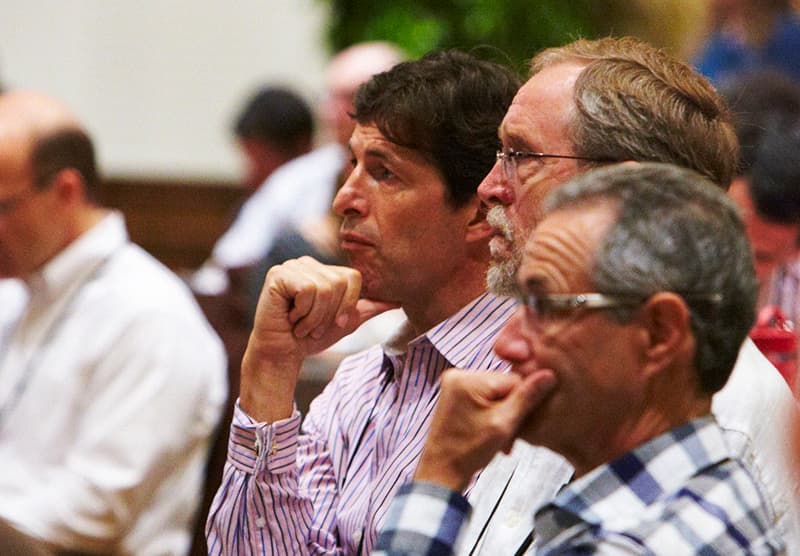
Business leaders, entrepreneurs and academics gathered for the first Catalyzing Conscious Capitalism conference to explore a different approach to leadership and business.
It marked the beginning of what would become a growing global coalition.
2009
Conscious Capitalism, Inc. is established.
Recognizing the need for an organization dedicated to advancing this new way of thinking, Conscious Capitalism, Inc. was established as a nonprofit.
Its mission was clear: to move conscious capitalism beyond ideas and into practice by convening leaders, growing the community and providing practical resources for organizations around the world.

2013
A philosophy reaches a global audience.
Mackey and Sisodia published Conscious Capitalism: Liberating the Heroic Spirit of Business—a New York Times and Wall Street Journal bestseller that introduced conscious capitalism to a global business audience.
The book articulated the four tenets of conscious capitalism—Higher Purpose, Stakeholder Orientation, Conscious Leadership and Conscious Culture—and introduced fresh thinking rooted in impact, to business leaders around the world.

2018
From philosophy to practice.
Building on the success of Conscious Capitalism, John Mackey, Raj Sisodia and Timothy Henry published The Conscious Capitalism Field Guide—a practical playbook designed to help leaders put the philosophy into action.
The focus became practical application—embedding the principles into leadership, culture and everyday business decisions.

2024
A new chapter.
Building on the success of The Conscious Capitalism Field Guide, Timothy Henry became CEO of Conscious Capitalism, Inc., bringing renewed focus to supporting CEOs and executive teams navigating an increasingly complex business environment.
Building on more than twenty years of momentum, the organization continues to evolve the movement for a new generation of leaders.

Today
Writing capitalism’s next chapter.
Today, Conscious Capitalism, Inc. convenes a global community of CEOs through local chapters, executive programs, research and leadership events.

Looking Ahead
The work is only beginning.
Artificial intelligence, geopolitical instability, declining trust, environmental pressures and rising stakeholder expectations are reshaping what leadership requires.
Our responsibility is to ensure conscious capitalism continues to evolve alongside those challenges—remaining relevant, practical and valuable for the leaders building the next generation of business.
